
Accommodation
and respite.
Respite gives you and the people who care for you a short break. Supported independent living (SIL) is help at home every day. Find out how each one works and how to start with Heart for Care.
 STA, respite & SIL
What this support
can include.
01Respite stays (short-term accommodation)
A respite stay gives you time apart from your usual carers, like family or friends, while they rest. The NDIS calls this short-term accommodation (STA). It is usually funded for up to 28 days a year.
02Help with everyday tasks during your stay
Workers help with the things you normally need help with, such as showering, cooking and using the toilet. Support is based on the level of help you usually get, so your routine can carry on.
03Supported independent living (SIL)
SIL is help or supervision from a support worker 24 hours a day, 7 days a week, in your home. You may share workers with housemates or have your own worker, depending on how much help you need.
04Building skills at home
In SIL, workers can help you learn and practise things like cooking, cleaning, keeping a routine and social skills. The aim is for you to live as independently as you can.
05Following the plans written for you
Workers follow your support plan and risk assessment during a stay or at home. If you have a behaviour support plan written by an NDIS behaviour support practitioner, our workers carry it out as written.
What to know before you start.
Respite, SIL and SDA: what's the difference
These supports sound alike but do different jobs.
- Short-term accommodation (STA), or respite: a short break of up to 14 days at a time, so your usual carers can rest.
- Supported independent living (SIL): ongoing help or supervision from support workers, around the clock, in the place you live. It pays for workers, not rent.
- Specialist disability accommodation (SDA): the housing itself. SDA homes are built for people with extreme functional impairment or very high support needs. SDA does not include support workers, so some people have both SDA and SIL.
- Medium-term accommodation (MTA): somewhere to live for up to 90 days when your long-term home is not ready yet, for example while home changes are being made or when leaving hospital. It covers the accommodation only.
How respite and SIL can be funded in your NDIS plan
STA support items sit in the Core supports category Assistance with Daily Life. In newer plans, SIL is in a stated Core category called Home and Living. Older plans show it under Assistance with Daily Life. Whether you get funding depends on your plan and what the NDIA agrees is reasonable and necessary.
For STA, you usually need to live with your main unpaid carers, or get daily drop-in support from them. They must also give you more than 6 hours of disability-related support a day. You can use it in a block of up to 14 days, or a weekend at a time. Plan it so the funding lasts the length of your plan.
From 1 July 2026, providers claim STA in two parts: hours of support, and accommodation. STA funding cannot pay for holiday packages, airfares, food, meals, or activity and entry costs.
SIL may suit you if you need someone with you 24 hours a day, including overnight, with hands-on help for at least 8 of those hours. SIL does not pay for rent, groceries or bills.
SIL providers must now be registered
From 1 July 2026, providers who deliver SIL must register with the NDIS Quality and Safeguards Commission (NDIS Commission). The NDIS says SIL can only be delivered by providers that are registered, or that applied to register before 1 October 2026. Your plan and funding do not change because of this.
If you choose and manage your own support workers, including their rosters, that is not SIL and the change does not affect you. Heart for Care is a registered NDIS provider (provider number 4050130206).
What to expect when you start
- You complete our intake and referral form.
- We agree a written service agreement with you before any support starts. It sets out the supports, costs, notice and how to raise concerns.
- We complete a risk assessment and a support plan with you.
- We match workers to your needs and preferences.
- We review your supports regularly, and sooner if your needs change.
Information checked against official NDIS sources in October 2026. Your plan and the NDIS rules decide what can be funded.
Getting started with this support.
- 01
Tell us what you need
Share your goals, location and the support you’re looking for.
- 02
Talk through the options
Discuss suitable support, funding and availability with our team.
- 03
Choose how to proceed
Decide on your next step with the information you need.
Before support starts, ask about availability, costs and your agreement. What to check
Questions people ask.
Have another question? Ask our team.
/01What is NDIS respite?
NDIS respite is the everyday name for short-term accommodation (STA). It funds support for you while your usual carers take a short break. The goal is to help them keep caring for you.
/02How many respite days does the NDIS fund?
STA is usually funded for up to 28 days a year. You can use up to 14 days in one block, or spread it out, such as one weekend a month. The amount in your plan depends on what the NDIA agrees is reasonable and necessary.
/03Is short-term accommodation the same as short term respite?
Yes. The NDIA renamed STA 'short term respite' in October 2025, then changed it back in 2026 after community feedback. You may see either name in letters or plans.
/04Does SIL pay for rent?
No. SIL pays for support workers only. You pay your own rent, food and bills. If you live in SDA, SDA funding pays the SDA provider and you pay a rent contribution.
/05Do I need SDA to get SIL?
No. SDA and SIL are separate supports. SIL is delivered in your home, which might be rented, owned, social housing or an SDA home. SDA is only for people who meet its own funding rules.
/06Can children get NDIS respite?
Sometimes. The NDIA may fund STA for a child whose support needs are more than is typical for their age, when a break helps the family keep caring. It does not replace normal parenting, like babysitting.
Related support.
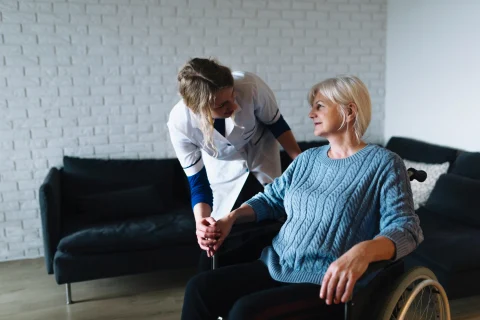
Personal care
Help with bathing, dressing and your daily routines.
Explore this support
Domestic assistance
Practical help with cleaning, laundry and dishes.
Explore this support
Support coordination
Understand your plan and connect with suitable providers.
Explore this support