
Support
coordination.
A support coordinator helps you understand your NDIS plan, choose providers and get your supports working together. You stay in charge of the decisions.
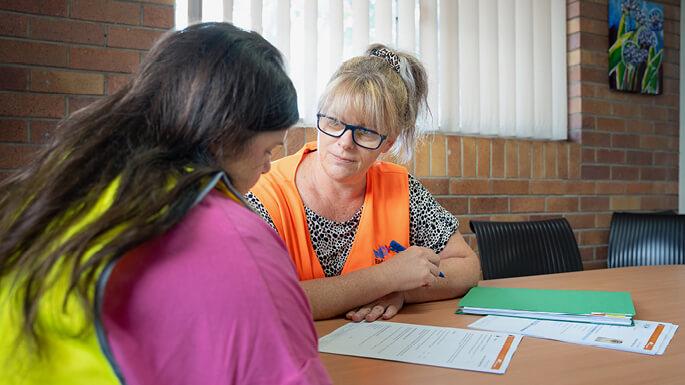 Support coordination
What this support
can include.
01Understanding your plan
We go through your plan with you, including your budgets and what each one can be used for. We explain what providers can charge and when you need a service agreement.
02Choosing providers that suit you
We help you find providers that match your needs, goals and preferences. We explain when you need a registered provider. You make the final choice, and we always include options outside Heart for Care.
03Connecting with services outside the NDIS
Some help comes from community and mainstream services, such as health, education, housing or local groups. We help you connect with them alongside your NDIS supports.
04Checking your supports are working
We check in about how your supports are going. If something is not working, we help you sort it out, or change providers if you want to.
05Planning ahead for a crisis
Level 2 support coordination includes planning for a crisis, such as a support falling through or a sudden change in your situation. That way, you and the people around you know the next steps.
What to know before you start.
Support coordination, specialist support coordination and plan management: what's the difference
These supports have similar names but do different jobs. You can have a support coordinator and a plan manager at the same time.
- Support coordination (Level 2): helps you build the skills and confidence to direct your own supports. Your coordinator helps you understand your plan, connect with providers and services, and keep everything working together.
- Specialist support coordination (Level 3): a higher level for people with complex needs or high risks in their situation. It is delivered by a qualified practitioner, such as a psychologist, occupational therapist or social worker, and aims to reduce complexity and help resolve crises.
- Plan management: a plan manager pays your providers and keeps your financial records. A plan manager does not find or arrange your supports.
- Support connection (Level 1): a lighter level that helps you understand your plan and connect with services. Some people get this kind of help from a local area coordinator instead.
Our conflict of interest commitment
Heart for Care also provides other NDIS supports, such as personal care and community participation. That creates a conflict of interest when we are also your support coordinator. The NDIA expects providers to be open about this and manage it. Here is our commitment to you.
If you are unhappy with how we handle this, you can tell us, or contact the NDIS Commission.
- You can choose any provider for your other supports. You do not have to use Heart for Care.
- Your choice of other providers will not affect the support coordination you get from us.
- When we look at options with you, we always include providers outside Heart for Care.
- If we have an interest in any support option, we tell you before you decide.
How support coordination is funded in your NDIS plan
Support coordination comes from the Capacity Building part of your plan, in the Support Coordination category. Newer plans may call it Support Coordination and Psychosocial Recovery Coaches. This funding is stated, which means it can only be used for what your plan describes.
Your plan shows which level of support coordination is funded. Level 3 specialist support coordination must be in your plan before it can be delivered. If it is not in your plan, talk to your my NDIS contact. Whether it is included depends on what the NDIA agrees is reasonable and necessary.
If your plan is NDIA-managed, you must use a registered provider. Heart for Care is a registered NDIS provider.
What to expect when you start
Contact us by phone on 1800 148 857, by email at admin@heartforcare.com.au, or through our online form. It helps to have your NDIS plan with you.
- You tell the NDIA you would like Heart for Care as your support coordinator. The NDIA sends us a request for service, and we accept it if we can support you.
- You complete our intake form, and we talk about your goals and your plan.
- We agree a written service agreement with you before support starts.
- We complete a risk assessment and a support plan with you.
- We check in regularly, review your supports when your needs change, and give the NDIA progress reports on how your plan is working.
Information checked against official NDIS sources in October 2026. Your plan and the NDIS rules decide what can be funded.
Getting started with this support.
- 01
Tell us what you need
Share your goals, location and the support you’re looking for.
- 02
Talk through the options
Discuss suitable support, funding and availability with our team.
- 03
Choose how to proceed
Decide on your next step with the information you need.
Before support starts, ask about availability, costs and your agreement. What to check
Questions people ask.
Have another question? Ask our team.
/01What does an NDIS support coordinator do?
A support coordinator helps you understand and use your plan, choose providers, and connect with community and mainstream services. They also help you build the confidence and skills to manage your own supports, so you can make your own decisions.
/02Who can get specialist support coordination?
The NDIA decides whether to include specialist support coordination in your plan. It is for people with complex needs or high risks in their situation, for example when many services are involved or support arrangements could break down. It is usually delivered more intensively for a set time.
/03Can my support coordinator also provide my other supports?
It can happen, but it creates a conflict of interest. The NDIA expects the provider to tell you about it, offer you other options and manage the risks. You can always choose a different provider for your other supports.
/04Can I change my support coordinator?
Yes. You can change your support coordinator at any time, as long as you follow the notice period in your service agreement. Tell the NDIA who you want to work with next. Your current coordinator should prepare a handover report.
/05Do I need a registered support coordinator?
If your plan is NDIA-managed, yes. If you self-manage or use a plan manager, you can choose a registered or unregistered support coordinator.
/06Is NDIS support coordination changing in 2028?
The Australian Government has announced a new support coordination and connection service from 1 July 2028. Under the proposed design, the NDIA would contract providers and pay for the service, so support coordination would no longer be funded in your plan. Not everyone would be eligible. Consultation closed on 2 October 2026 and the government will decide the final design. Until 1 July 2028, participants keep getting support coordination under current arrangements.
Related support.

Personal care
Help with bathing, dressing and your daily routines.
Explore this support
Community participation
Outings, activities and time with other people.
Explore this support
STA, respite & SIL
Discuss STA, respite and supported independent living.
Explore this support